STUDENT DEVELOPMENT
Enhancing Clinical Education for Health Professions Students: Evidence-Based Strategies
Enhancing Clinical Education for Health Professions Students: Evidence-Based Strategies
Clinical education is the bridge between the classroom and the bedside. For students across the health professions, it is where theoretical knowledge becomes practical competence, where communication, clinical reasoning and decision-making are forged through real patient care. As healthcare systems grow more complex, the pressure on clinical training to produce practice-ready graduates has never been greater.
This guide outlines empirically supported approaches to strengthening clinical education, drawing on early clinical experiences, varied patient encounters and simulation-based training. It also addresses the persistent challenges, patient access, faculty workload and inconsistent supervision, and offers practical direction for improving training in the real world.
Why Clinical Education Matters
Clinical education combines classroom learning with hands-on healthcare experience. It builds the practical and professional competencies students need to succeed: effective communication, critical thinking, clinical reasoning and sound decision-making. Beyond technical skills, it shapes professional identity and instils the values that define good practice, empathy, accountability and a commitment to patient safety.
Done well, clinical education does more than teach procedures. It cultivates confidence, judgement and the ability to act under uncertainty, qualities no lecture can fully deliver.
Early Clinical Experiences
Introducing students to clinical settings early in their training is one of the most consistently supported strategies in the literature. Early exposure helps students build core competencies, establish a professional identity and develop a genuine, sustained commitment to a healthcare career.
When students meet patients from the first year of study, the abstractions of anatomy and physiology acquire meaning and context. They learn to see the person behind the condition, practise taking histories and begin to understand the rhythms of clinical workflow. Early contact also supports professional socialisation, the gradual process by which students absorb the norms, ethics and culture of healthcare practice.
The benefits are not only motivational. Students who enter later clinical rotations already comfortable with patients and settings tend to perform better, communicate more confidently and adapt more quickly to increasing responsibility.
Diverse Patient Encounters
The breadth of a student's clinical exposure shapes the depth of their readiness. Encounters across different ages, presentations, acuities and care settings build the pattern recognition and adaptability that safe practice requires.
A student who has seen only textbook presentations will struggle when reality diverges. Diverse patient encounters, spanning primary care, inpatient wards, emergency settings and community clinics, teach students to reason across uncertainty, adjust their communication to different patients and manage complexity without becoming overwhelmed.
Structuring rotations to guarantee this variety, rather than leaving it to chance, is one of the most effective ways to ensure equitable and consistent training across a cohort.
Simulation-Based Training
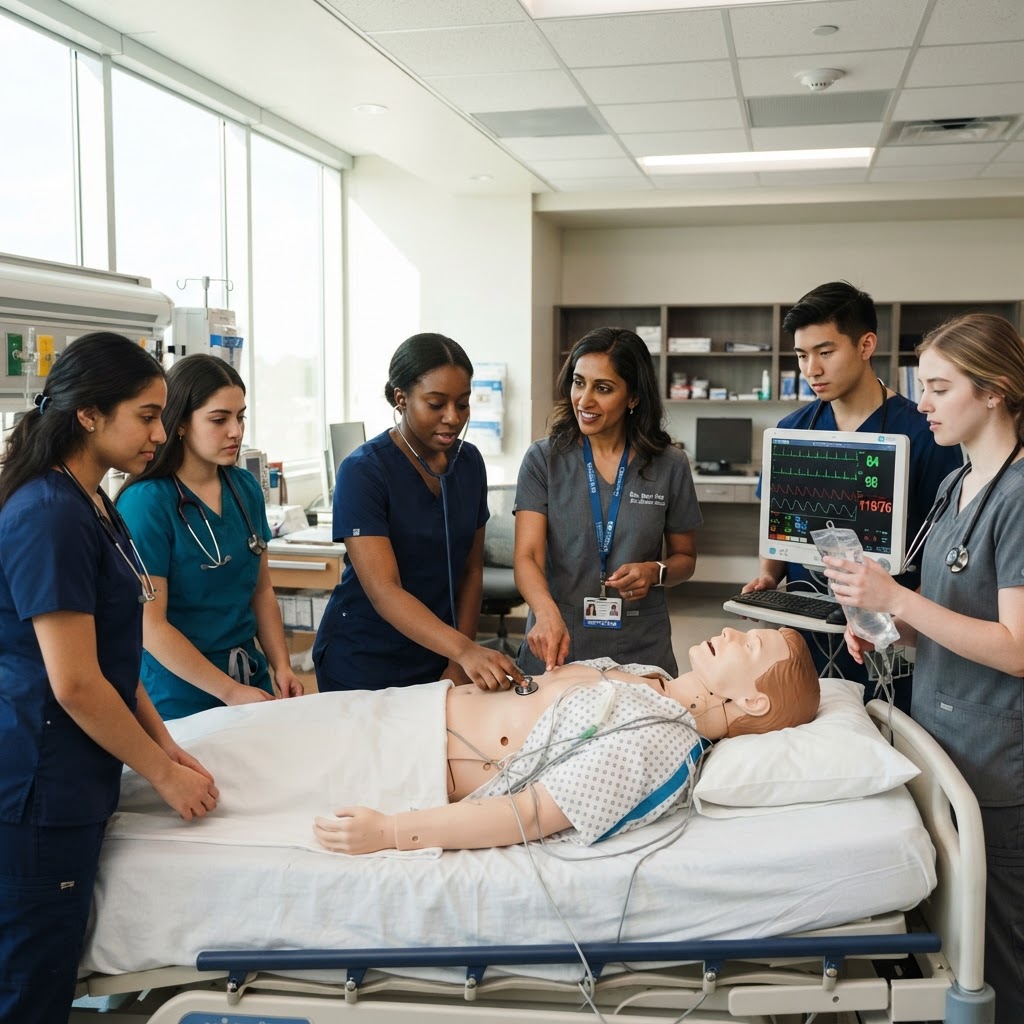
Simulation has become a cornerstone of modern clinical education. It allows students to master complex procedures and practise high-stakes decision-making without risk to patients, directly enhancing safety.
In a simulated environment, a student can rehearse an intubation, manage a deteriorating patient or navigate a difficult conversation repeatedly until the skill is reliable. Errors become learning opportunities rather than harm. Simulation also permits deliberate practice of rare or high-risk scenarios that students may never encounter reliably during rotations.
Effective simulation is not about expensive equipment alone. Even low-fidelity task trainers and role-play build meaningful skills when the focus is on structured practice, targeted feedback and reflective debriefing. The debrief, where the learning is consolidated, is where simulation delivers most of its value.
Mentorship and Feedback
Consistent mentorship and high-quality feedback are the connective tissue of clinical education. Students learn most when they are guided by clinicians who model reasoning aloud, observe performance and give specific, timely and constructive input.
Good feedback is specific rather than general, timely rather than delayed and focused on behaviour rather than personality. It identifies what was done well, what could be improved and the concrete next step. Without it, students repeat the same mistakes or plateau without understanding why.
Mentorship adds a longer arc: it supports professional growth, career decision-making and wellbeing through the stresses of clinical training. Institutions that invest in structured mentorship see stronger engagement, better retention and more resilient graduates.
Persistent Challenges
Several well-documented challenges continue to limit the quality of clinical education, and addressing them is essential for any improvement strategy.
Patient Access
Rising student numbers, shorter hospital stays and pressure on clinical sites mean that guaranteed, meaningful patient contact is harder to secure. Competition for teaching patients and concerns about consent and privacy can reduce the volume and quality of encounters.
Faculty Workload
Clinicians are asked to teach alongside full clinical, administrative and research duties. Unrecognised or uncompensated teaching leads to fatigue, inconsistent supervision and variable training quality.
Inconsistent Supervision
Students placed with different preceptors often receive very different experiences. Without clear learning objectives and standardised expectations, training becomes uneven across a cohort.
Practical Strategies for Improvement
- Front-load clinical exposure. Introduce patient contact early and progressively, so students build comfort and competence before high-stakes rotations.
- Guarantee encounter diversity. Design rotations and logbooks that require breadth across settings and presentations, rather than relying on chance.
- Invest in simulation across fidelity levels. Pair high-fidelity scenarios for complex skills with low-cost task trainers and role-play for communication and routine procedures.
- Prioritise the debrief. Treat structured reflection and feedback as the core of simulation and bedside teaching, not an add-on.
- Protect and reward teaching time. Recognise clinical educators formally and build teaching into workload models so supervision is consistent.
- Standardise learning objectives. Give every preceptor and student a shared map of expected competencies so training quality does not depend on who you happen to be assigned.
- Build mentorship in. Pair students with mentors who support both clinical growth and professional development over time.
The Path to Practice-Ready Graduates
No single intervention transforms clinical education. The evidence points to a combination, early exposure, diverse encounters, simulation, mentorship and feedback, integrated thoughtfully across a programme. Innovative approaches must be embedded into student education deliberately, not added piecemeal, if graduates are to be prepared for the realities of contemporary healthcare.
When institutions invest in these strategies, the payoff is measurable: students who enter practice confident, competent and committed to patient-centred care. That is the ultimate measure of effective clinical education, and the goal worth designing toward.